How Alto works
Alto takes the planning out of practice.
Pupils don’t need to decide which topics to work on or what to revise, and teachers and parents don’t need to plan each session. Pupils simply start. Alto selects and adjusts the practice, brings the session to a clear finish and shows their progress afterwards.
Why Alto is designed this way
Teachers have a curriculum to cover, and there isn’t always enough time for pupils to practise new skills until they become fluent and firmly established.
Alto builds on classroom teaching, providing targeted, repeated practice that helps pupils consolidate what they’ve learnt and retain it over time.
Alto is designed for practice rather than teaching, making regular practice easier to sustain at school and at home.
How Alto chooses what to practise
Finding the right level
Based on their school year, Alto begins with practice slightly below a pupil’s expected level and adjusts over their first few sessions. Skills they already know are recognised quickly, while gaps receive more attention.
Alto continues to adapt as pupils progress, adjusting the practice to what they know and what they still need to learn.
Progressing through the curriculum
In Maths, Alto broadly follows the curriculum sequence, addressing gaps in earlier knowledge before moving pupils forward. It tracks how consistently pupils answer questions correctly over time, so progress is based on what they can reliably do rather than simply completing exercises.
Remembering what you’ve learnt
Getting something right once doesn’t mean it will be remembered weeks or months later.
Alto brings knowledge and skills back at carefully spaced intervals, mixing earlier learning with newer material. Much of each session deliberately revisits what pupils have already learnt, helping them consolidate and retain it over time.
Even after pupils have mastered something, periodic revision helps keep that knowledge available for more advanced learning and future assessments.
What a practice session looks like
Pupils choose a subject and start their session. Alto takes care of the rest.
Questions appear one at a time, with immediate feedback. Timing is used where rapid recall is the goal, such as times tables and number facts. Other subjects allow pupils to work without a time limit on individual questions.
Each session is short, with a defined end point. When the practice is complete, Alto stops automatically and pupils can see what they’ve worked on.
No endless levels or activities designed to keep pupils on the screen. Just a useful amount of practice, then they’re done.
Progress you can see
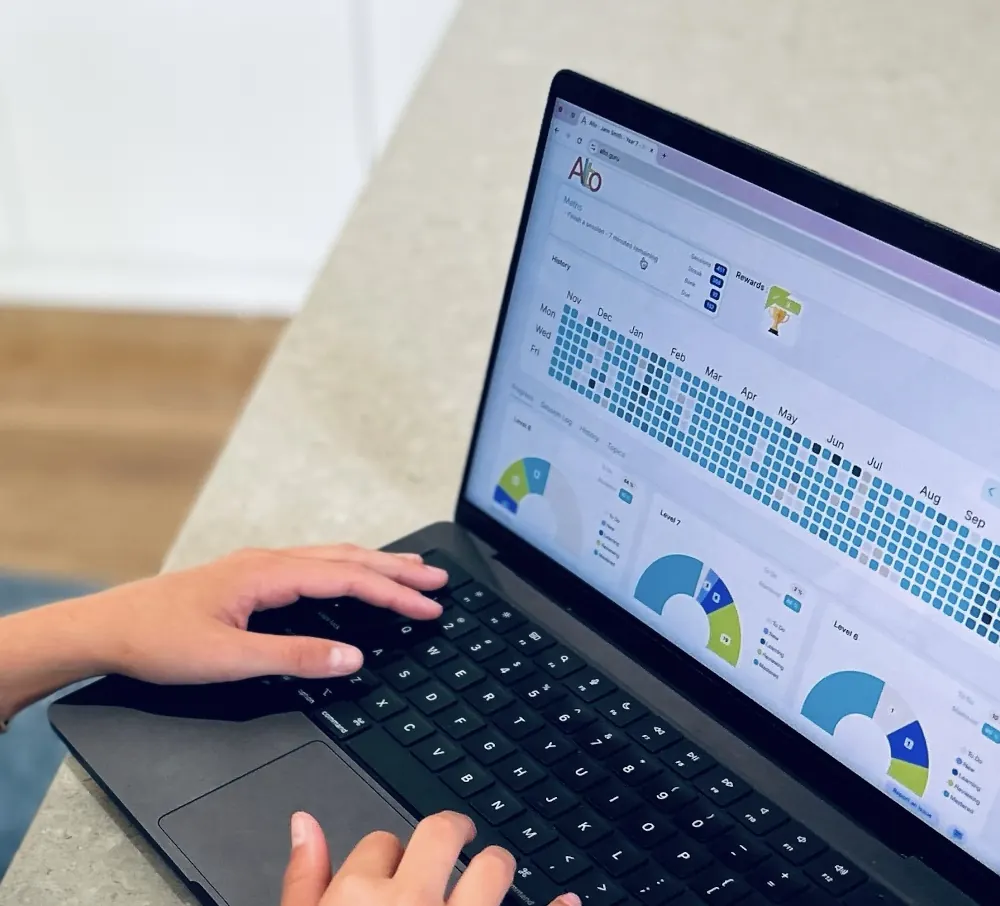
Alto tracks what pupils practise and how their knowledge develops over time, giving pupils, parents and teachers a clear picture of their progress.
Pupils can see what they’re learning, reviewing and have mastered. Parents can follow their child’s progress, while teachers can see the same information across a whole class without having to set tests or mark work.
Progress is not simply a record of completed questions. Alto continues to check earlier learning, so skills that become less reliable return for further practice.
Understanding the Alto level
7.5
Alto reports a level for each pupil in each learning area, reflecting their progress through the relevant curriculum sequence. For example, a level of 7.5 represents approximately halfway through Level 7 of that sequence.
The level reflects what pupils can reliably do, rather than simply what they’ve attempted. It is a guide to curriculum progress, not an exact measure of attainment or a test score.
Alto continues to revisit earlier learning at carefully spaced intervals, helping pupils retain their knowledge as they move forward.
See Alto in action
See how a pupil starts a session, completes their practice and follows their progress afterwards.
Quick answers
How long is a session?
Session length varies by age and learning area. Alto uses short defaults, typically around 5 to 10 minutes for younger pupils and about 10 to 15 minutes for older pupils. Teachers or parents can adjust the length where appropriate.
Each session has a defined end point. Once the work is complete, Alto stops, so the pupil knows they are finished and an adult does not have to call time.
Pupils who want to progress more quickly can do an additional session, for example one in the morning and another in the afternoon, rather than making a single session unnecessarily long.
What if a pupil is ahead or behind?
Alto works in both directions. It gives more practice where foundations are less secure and moves forward when a pupil is ready.
This means a whole class can practise at the same time, with each pupil working at their own level, without the teacher preparing different activities.
Does Alto replace teaching?
No. Alto is a practice system. Teachers introduce and explain new concepts, while Alto provides the repeated practice that helps pupils become accurate, fluent and retain what they’ve learnt.
Some difficulties need further teaching rather than more practice alone. Alto’s record of pupils’ responses can help teachers identify areas that need attention.
Does Alto use AI?
There is no AI in pupil learning sessions. Alto uses a structured, adaptive practice system to select questions, assess responses and schedule revision.
Does Alto use games and rewards?
Very little. Alto includes simple personalisation and recognition of regular practice and progress, but deliberately avoids elaborate games, points systems and virtual rewards.
The emphasis is on pupils seeing their own improvement, rather than keeping them on screen for longer.
What devices does Alto work on?
Alto works in a modern web browser. There is no app to install.
Is Alto the same as the Great Times Tables Race?
The Great Times Tables Race is Alto’s free times tables challenge for schools. It uses Alto’s times tables practice, with additional goals and recognition for pupils and classes.
Alto also provides personalised practice in number facts, Maths and Literacy.
Have you done your Alto today?
Useful practice, without planning it every day.
Start with one child at home, or give a whole class practice that meets pupils at different levels.