The easier way to make practice a habit. So progress can follow.
Alto gives your child short, targeted practice at the right level in maths, spelling and grammar. A session takes ten to fifteen minutes, wherever they are: at home, after school or in the holidays.
Card details needed to start the trial. Cancel any time.
Coming soon
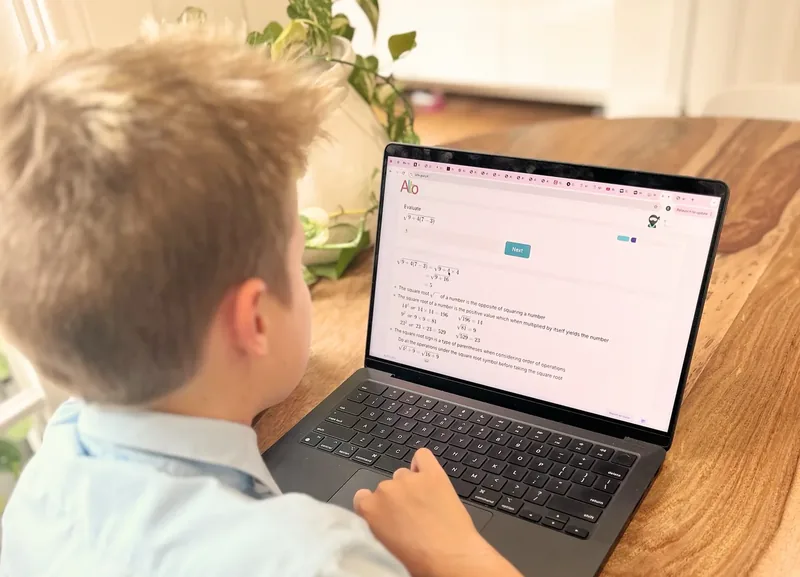
Regular practice, without the tutoring price tag
The benefit comes from doing a little, often.
Six ten-minute sessions across a week do more than one hour on a Sunday.
Most children will not volunteer to practise maths or spelling every day. They do not have to love every session for it to be worthwhile. Your job is simply to help make the routine happen.
Alto makes that easier. The practice is already chosen, it is pitched at the right level, and the session is short enough to fit into ordinary family life.
Daily, targeted practice for a fraction of what regular tutoring costs.
Ahead, on track, or catching up
Your child does not need to be behind to benefit from Alto.
It works in both directions: filling gaps that are holding them back and moving them forward when they are ready. You do not need to work out which they need. Alto does that.
Alto keeps gamification light, with simple features such as personal streaks and visible progress. You set the streak target yourself, four days a week if that suits, and sessions can be banked and streaks frozen over the holidays, so an ordinary week does not break it. The aim is not to keep children online longer, but to help them practise regularly enough for important skills to become more fluent and automatic.
What your child actually does
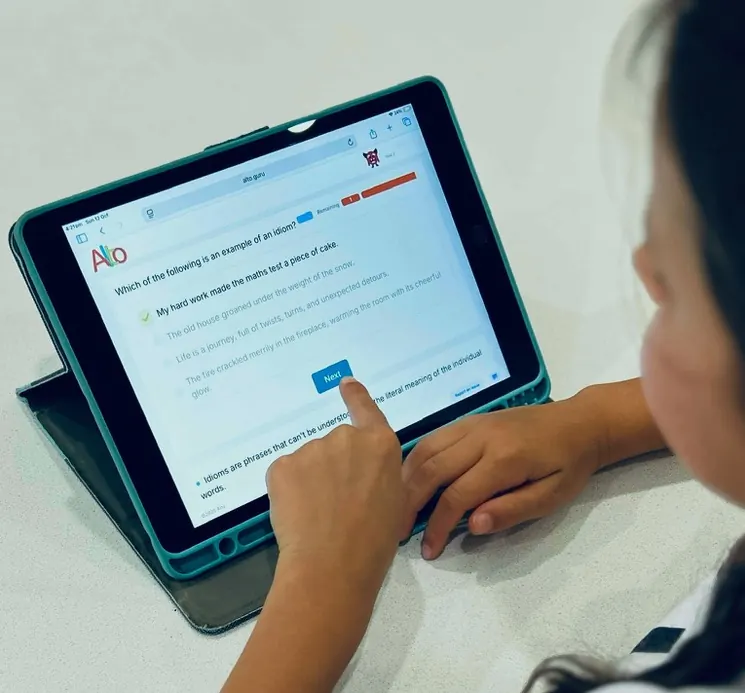
Your child signs in, presses Start and completes a short session tailored to their level. Alto chooses the practice and finishes automatically, so there is no planning, supervision or negotiating about when they have done enough.
Sessions are designed to fit into everyday family life, whether before school, after dinner or during the holidays.
What you see
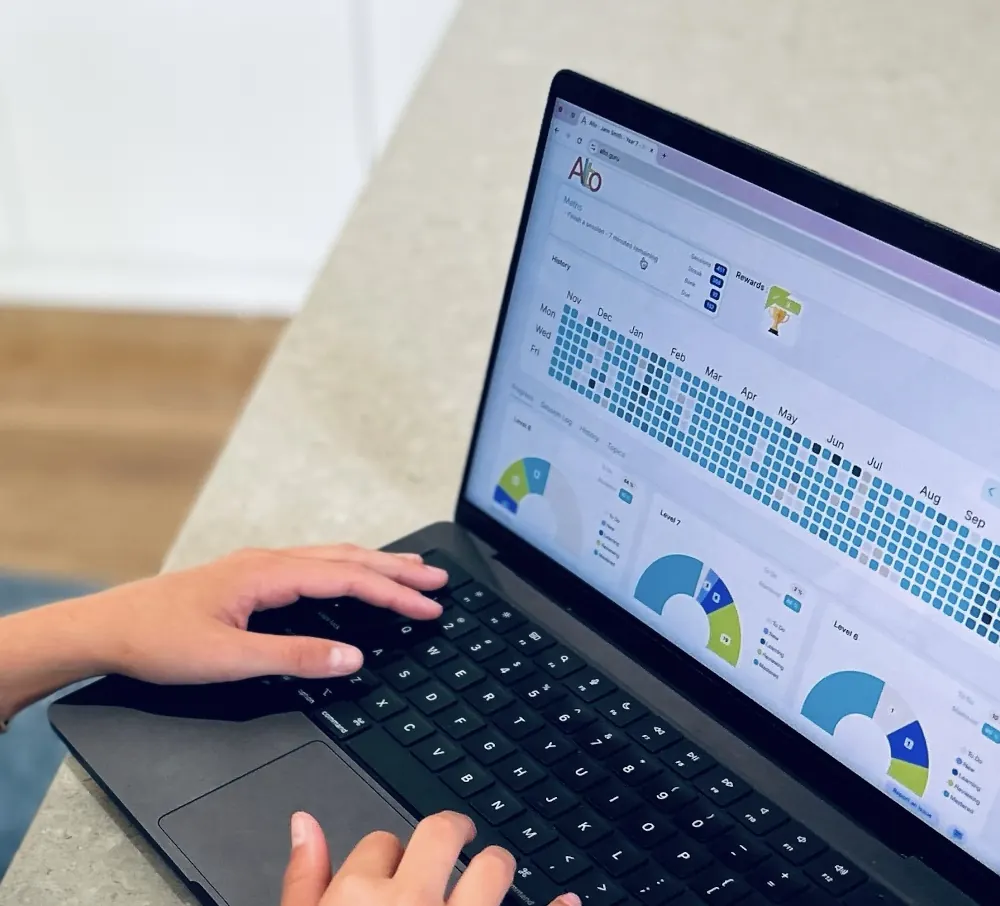
You can see whether your child is practising regularly, what they have been working on and how their skills are developing.
Progress is shown visually, so your child can see what they are learning, reviewing and have mastered. Parents can also see their child’s current level and progress across learning areas.
The focus is on each child’s own development over time, rather than comparisons with other pupils.
On speed and pressure
No countdown clock on every question. No pupil is ranked by name, and no pupil is shown a number saying they are behind. Answers are timed quietly, because recalling a fact quickly is part of knowing it, and a pupil’s speed is measured against their own earlier self rather than against the class.
Alto keeps track of what pupils know and what needs more practice, bringing earlier learning back when it is needed.
What it costs
Choose the subscription that suits your family.
Primary
£6.99/month
or £69.99/year
For one primary school child.
Maths, mental maths strategies, grammar and punctuation.
Secondary
£9.99/month
or £99.99/year
For one secondary school child.
Secondary Maths, from strengthening foundations through to GCSE.
Family
£15.99/month
or £159.99/year
For up to four children, primary or secondary.
Includes the relevant Alto learning areas for each child’s stage of schooling.
Times tables, number facts and spelling stay free.
Maths practice built for pupils here. Alto Maths is designed around the curriculum your child is taught, and the four UK nations each set their own. See how Alto maps to each one.
Pricing is per child or family bundle, with an annual subscription offering two months free compared with monthly billing.
Try Alto free for 30 days. Card details are required to begin your trial, but you won’t be charged if you cancel before it ends.
After your trial, your chosen subscription begins automatically. You can cancel at any time through your account.
Coming soon
Common questions
Will my child actually use it?
Alto cannot make a child want to practise every day. A parent still needs to decide that regular practice matters, set the expectation and help make it part of the routine.
What Alto does is make that much easier to follow through on. There is nothing to plan and very little to negotiate: your child signs in, presses Start and does a short session at their level. Alto chooses the practice, keeps track of what needs work and ends the session automatically.
Practising a skill is not always fun, but regular practice is how skills improve. Alto is for families who are prepared to commit to a small amount of it, consistently.
Does this mean more screen time?
Yes. Alto is usually ten to fifteen minutes of screen time a day. The aim is to make those minutes as useful as possible.
Alto gets straight to the practice. There is no game to play around the learning, no distracting rewards system and no reason for a session to take longer simply to keep a child engaged. The work is targeted to what they need to practise and the session has a clear finish.
If your child wants to do more, they can. But Alto is designed to build skills efficiently, not to maximise the amount of time they spend online.
Is this tutoring?
No. Alto is not a substitute for good teaching.
A teacher or tutor can introduce a new concept, explain it in different ways, notice how a pupil is thinking and build a relationship that helps them learn. Technology cannot replace that.
What Alto can do particularly well is practice. It gives pupils short, targeted practice regularly rather than relying on an occasional longer session. It keeps a detailed record of how they are performing within individual topics and uses that information to decide what they should work on next.
That can mean going back to fill gaps that are making later work difficult, or moving ahead when a pupil is ready. A pupil who encounters a topic in Alto before it comes up at school may also arrive with some familiarity, so the teaching in class can deepen and consolidate their understanding.
Tutoring can be enormously valuable when a child needs individual teaching and support. Alto does a different job: providing the frequent practice that builds fluency, at a fraction of the cost of having a tutor several times a week.
Why not just use free worksheets?
You can. There are plenty of good free questions and worksheets available.
The challenge is making sure your child is doing the right practice at the right time. A useful practice sequence needs to revisit things that are not yet secure, consolidate things that have just been learned and keep moving forward when a pupil is ready.
Alto brings the practice material together and does that sequencing for you. Its learning engine uses your child’s answers to decide what should come next, while keeping track of progress within individual topics.
So you are getting both the learning material itself, including a substantial bank of maths, spelling and grammar practice, and the system that turns it into targeted daily practice without a parent having to find, choose and manage the work each day.
My child already uses Alto at school. Do I need to pay?
No. If your child uses Alto through their school, you do not need a family subscription for them to keep using the Alto access their school provides.
You can connect to their school account for free, see their account details and follow the progress available through their school account. Their school access continues whether or not you subscribe.
A family subscription is useful if you want to do more at home. It lets you give your child access to additional Alto learning areas and practice beyond what their school has chosen to use.
You can try those family features free for the first 30 days and then decide whether they are useful for your family.
How does the trial work?
Your first 30 days are free. You will need to enter a card when you start, but you will not be charged during the trial.
If you continue after the 30 days, your chosen subscription begins automatically, monthly or annual as you picked. If you do not want to continue, cancel from your account before the trial ends and you will not be charged.
Have you done your Alto today?
Start with one session and see
Coming soon
Parents: Does your child already use Alto at school? Here is what that means.